
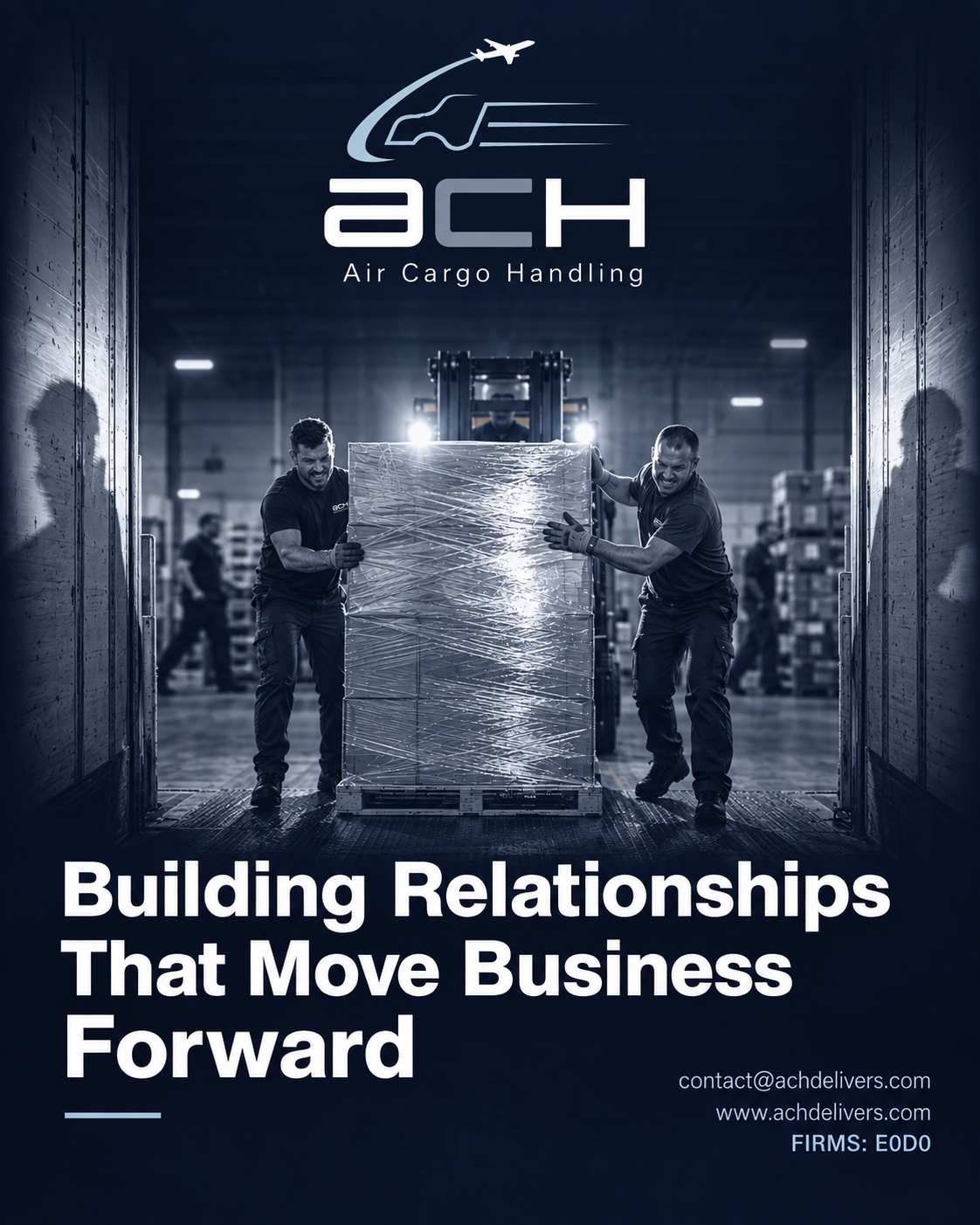
Building Relationships That Move Business Forward
Behind every shipment is a team of people working hard to keep America’s small businesses moving. At ACH, we believe logistics is about more than cargo—it’s about showing up, solving problems, and building the trust that turns business relationships into lasting partnerships.
Building Relationships That Move Business Forward
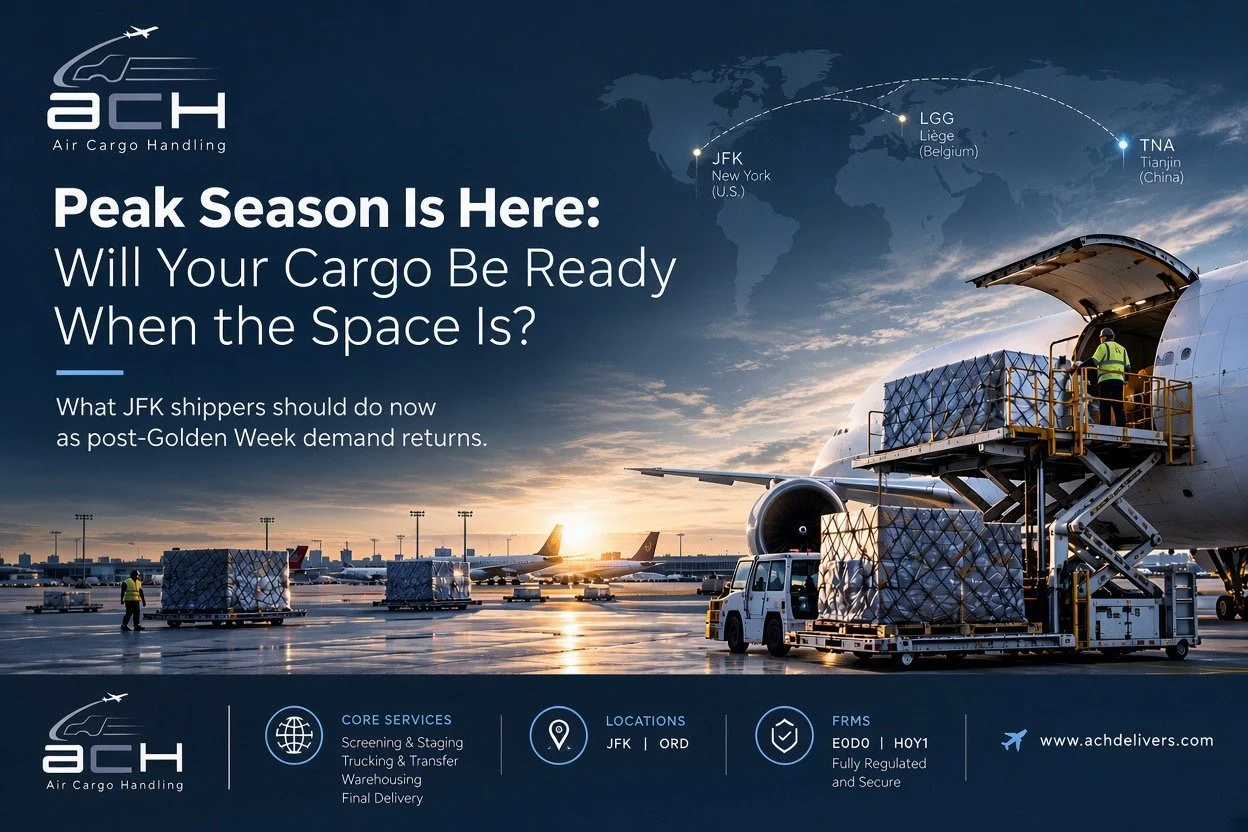
Peak Season Is Here: Will Your Cargo Be Ready When the Space Is?
Peak season brings tighter capacity, shifting fuel costs, and less room for error. For JFK shippers, securing a booking is only part of the equation. Cargo readiness, screening, warehouse cutoffs, and reliable ground transportation all play a role in keeping freight moving.
Discover five questions every shipper should ask before booking, and how better coordination can help protect your schedule and keep alternatives open when plans change.
Read More: Peak Season Is Here: Will Your Cargo Be Ready When the Space Is?
Planning your Q4 shipments? Contact contact@achdelivers.com to discuss cargo readiness, warehousing, screening, and routing options.
ACH Delivers. Elevated by Reputation, Powered by Relationships.
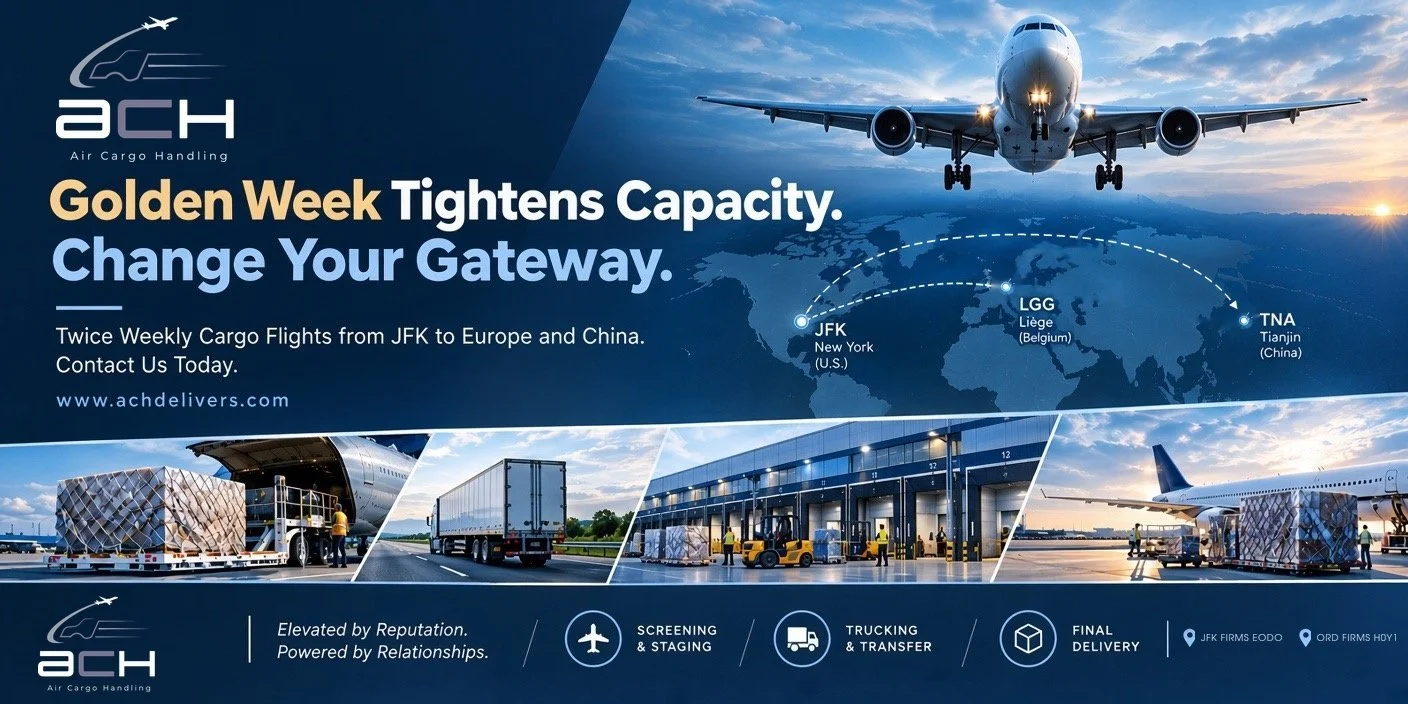
When Golden Week Tightens Capacity, Change the Gateway
When Golden Week tightens air cargo capacity, finding another flight may not be enough. Alternative gateways such as Liège and Tianjin can create new options, but only when screening, staging, storage and ground transportation can move with the routing. As shippers favor shorter commitments and market conditions shift quickly, the ability to change the gateway and coordinate the entire movement becomes a competitive advantage. ACH can help you evaluate your options at JFK and build a practical routing plan around your next shipment. Talk to our team today.
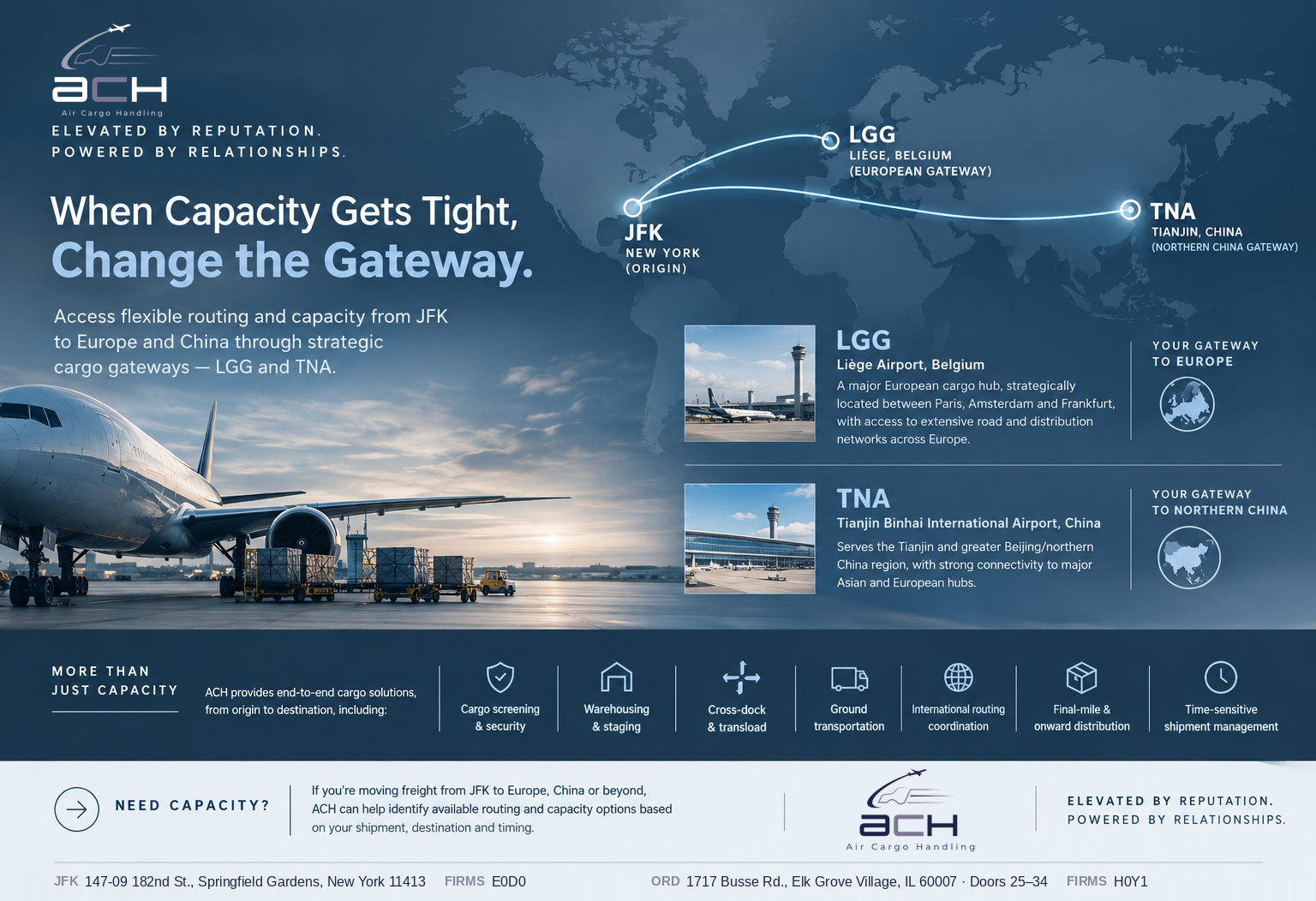
When Air Cargo Capacity Gets Tight, Change the Gateway
When air cargo capacity gets tight, the solution may not be another flight. It may be a different gateway. Explore how alternative routings through Liège (LGG) and Tianjin (TNA) can create options for freight moving from JFK to Europe and northern China, with ACH coordinating the cargo handling, warehousing, ground transportation, and distribution needed to move shipments from origin through final delivery.
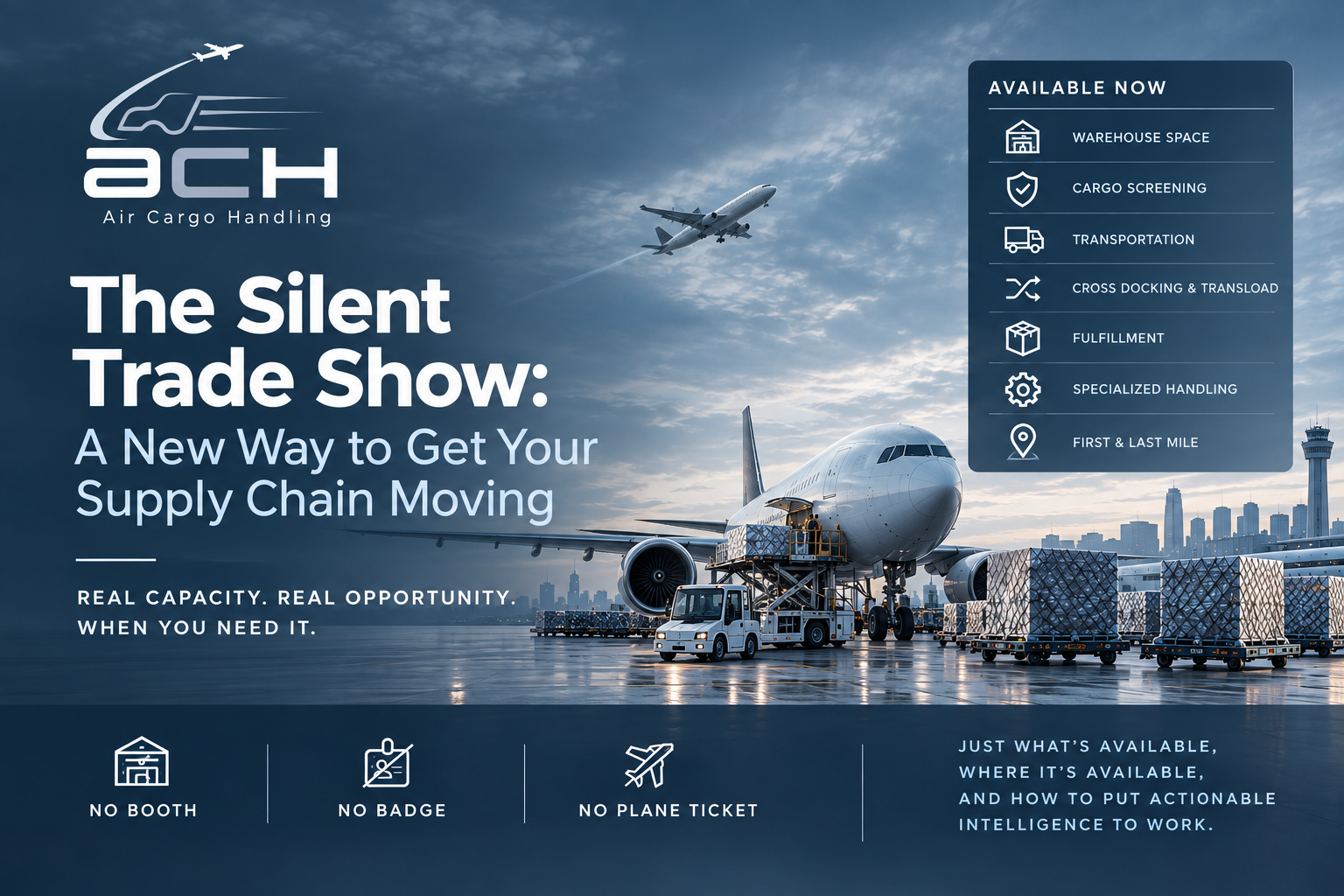
The Silent Trade Show: A New Way to Keep Your Supply Chain Moving
What if your next logistics solution was available before you even knew you needed it? ACH’s Silent Trade Show concept gives shippers and logistics teams visibility into real-world capacity at its JFK Cargo Hub, including bonded warehousing, TSA-approved cargo screening, cross-docking, transload, fulfillment, and transportation support. The Daily Feed makes those opportunities easier to see, understand, and put to work.
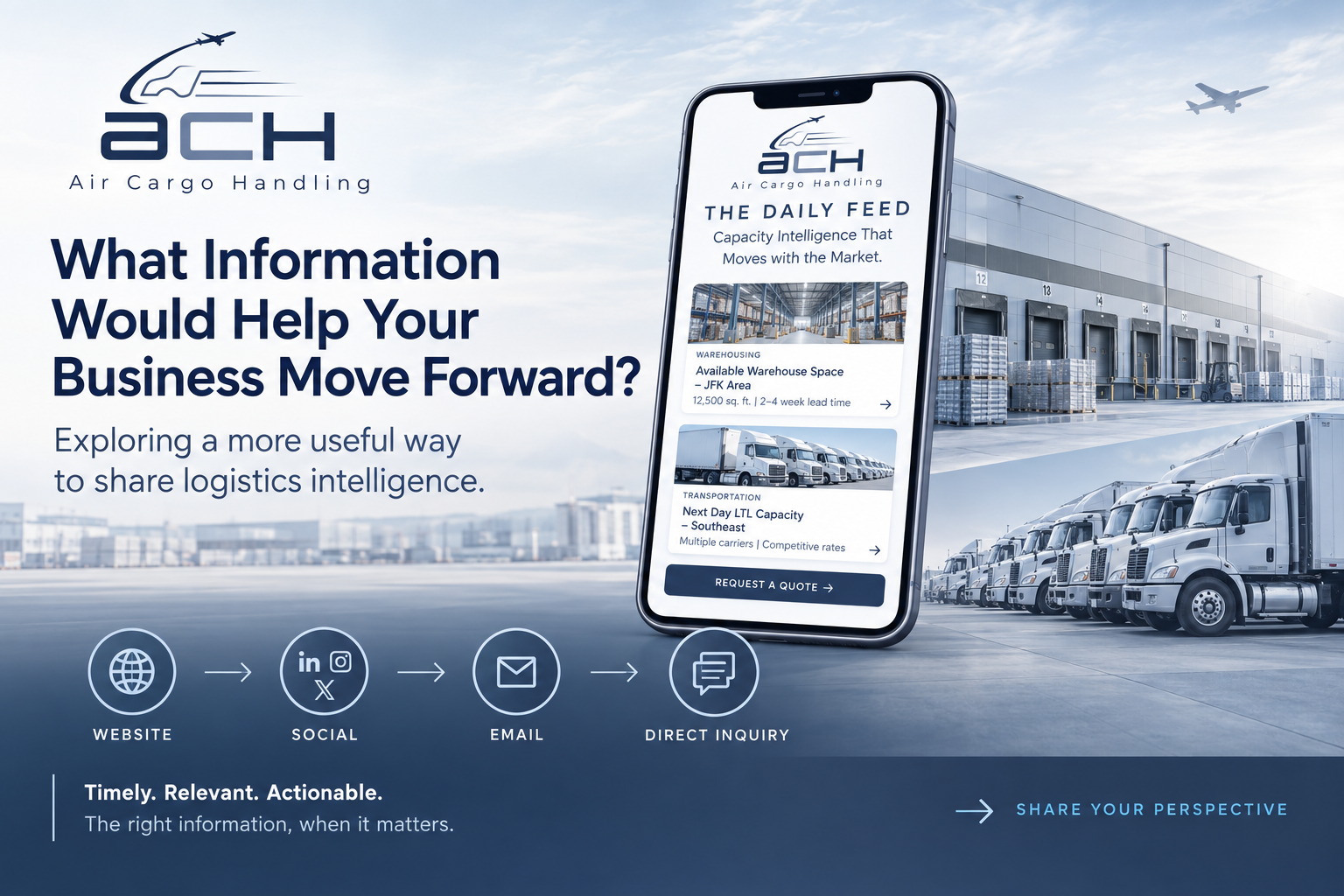
What Information Would Help Your Business Move Forward?
Information is most valuable when it helps someone make a decision. What if your logistics partner could put timely, actionable opportunities on your radar—not just tell you what services they offer?
ACH is exploring The Daily Feed: Capacity Intelligence That Moves with the Market—a concept built around sharing relevant, real-time capabilities and opportunities. Before taking it further, we want to hear from the market: What information would be most valuable to your business?
The Art of Customization: Building Logistics Solutions That Fit the Business
The best logistics solution isn’t the one with the longest service list—it’s the one that fits your business.
Warehousing, transportation, cargo handling, screening, fulfillment, and inventory management all play an important role. But a checklist of capabilities doesn’t solve every operational challenge.
The better question is whether your logistics partner can combine the right services to meet your specific needs.
Because logistics rarely fits into neat categories. A shipment may require screening and temporary storage. Inventory may need to be picked, packed, and shipped. Seasonal demand may call for additional capacity without the cost of building new infrastructure.
That’s where customization becomes an operating advantage.
At ACH, we start with your business—not a service catalog. Sometimes the right solution is warehousing. Sometimes it’s transportation coordination or fulfillment. Often, it’s a combination of capabilities working together.
The goal isn’t to sell every service. It’s to deliver the right solution at the right time.
Because effective logistics does more than move cargo. It gives businesses greater confidence, flexibility, and control.
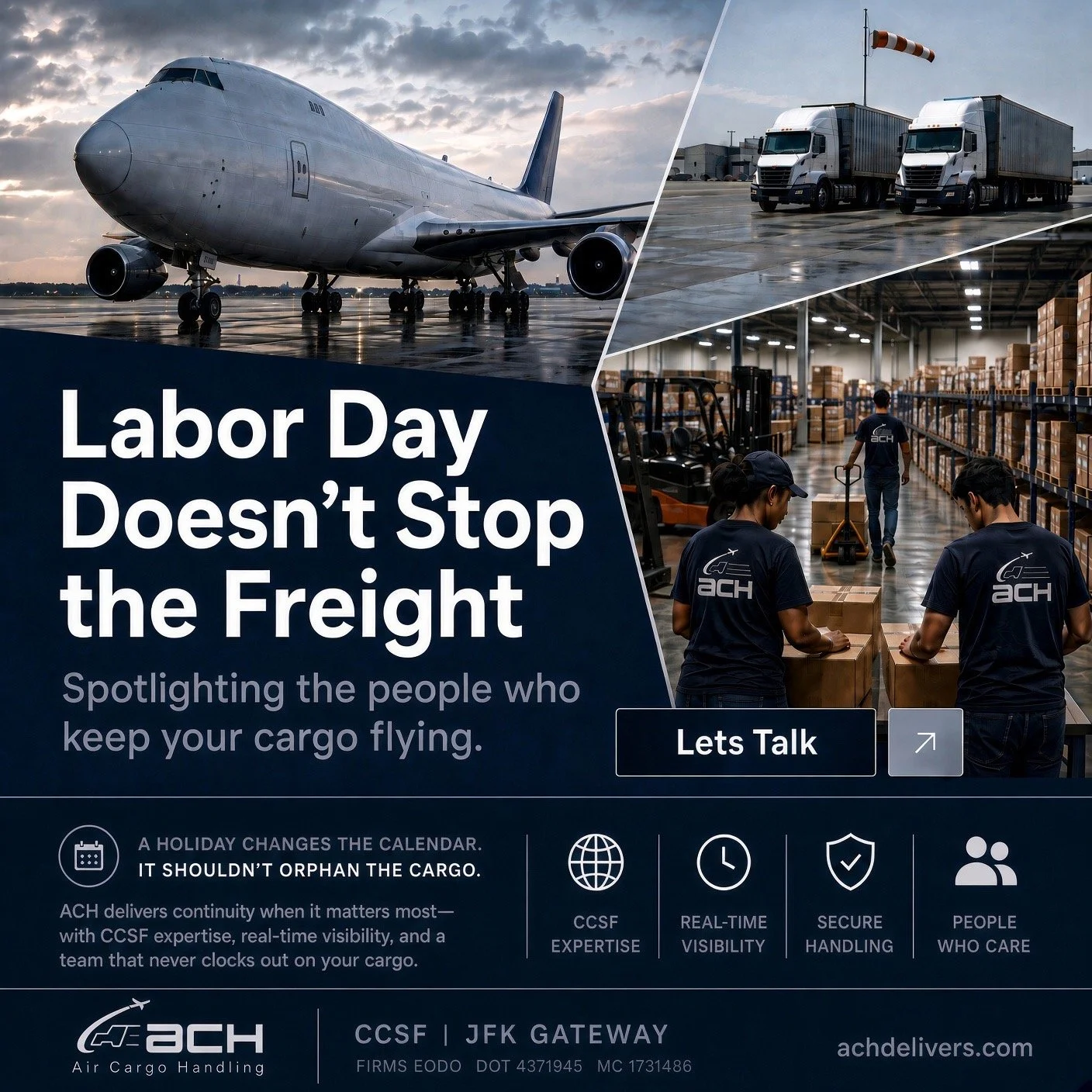
Labor Day Doesn’t Stop the Freight. It Highlights the People Who Keep It Moving.
Labor Day may slow down much of the economy, but freight keeps moving. At JFK, cargo still needs to be received, screened, secured and delivered—often while schedules and staffing look very different.
This Labor Day, ACH recognizes the people behind that process: the warehouse teams, screening professionals, drivers and operations teams whose experience, discipline and accountability keep cargo secure and moving when the rest of the network slows down.
When Efficiency Becomes a Liability: Why Optionality Is the New Supply Chain Advantage
Supply chains built for maximum efficiency can become surprisingly fragile when conditions change. As disruptions become routine, the competitive advantage is shifting from simply moving freight at the lowest cost to having the flexibility, infrastructure, and relationships to respond when the original plan breaks. For ACH, that means giving customers more than capacity—it means providing the options and agile solutions they need to keep freight moving.
The Operating Model the Forecast Can’t Break
The forecast will always be wrong. The question is what happens when it is. Modern supply chains need more than efficiency—they need flexibility, security and the ability to adapt in real time. For air cargo, that means bringing critical capabilities together so freight can stay secure, keep moving and recover quickly when plans change. The forecast is a plan. The operating model is the advantage. ACH Delivers
The Warehouse Is Becoming the Control Tower
The warehouse is no longer simply a place where cargo waits. As supply chains become more complex and unpredictable, strategically positioned facilities are becoming critical decision points, connecting inventory visibility, screening, transportation, compliance, and fulfillment. The real value isn't simply storage capacity. It's the ability to respond faster, create options, and keep cargo moving when the original plan changes.
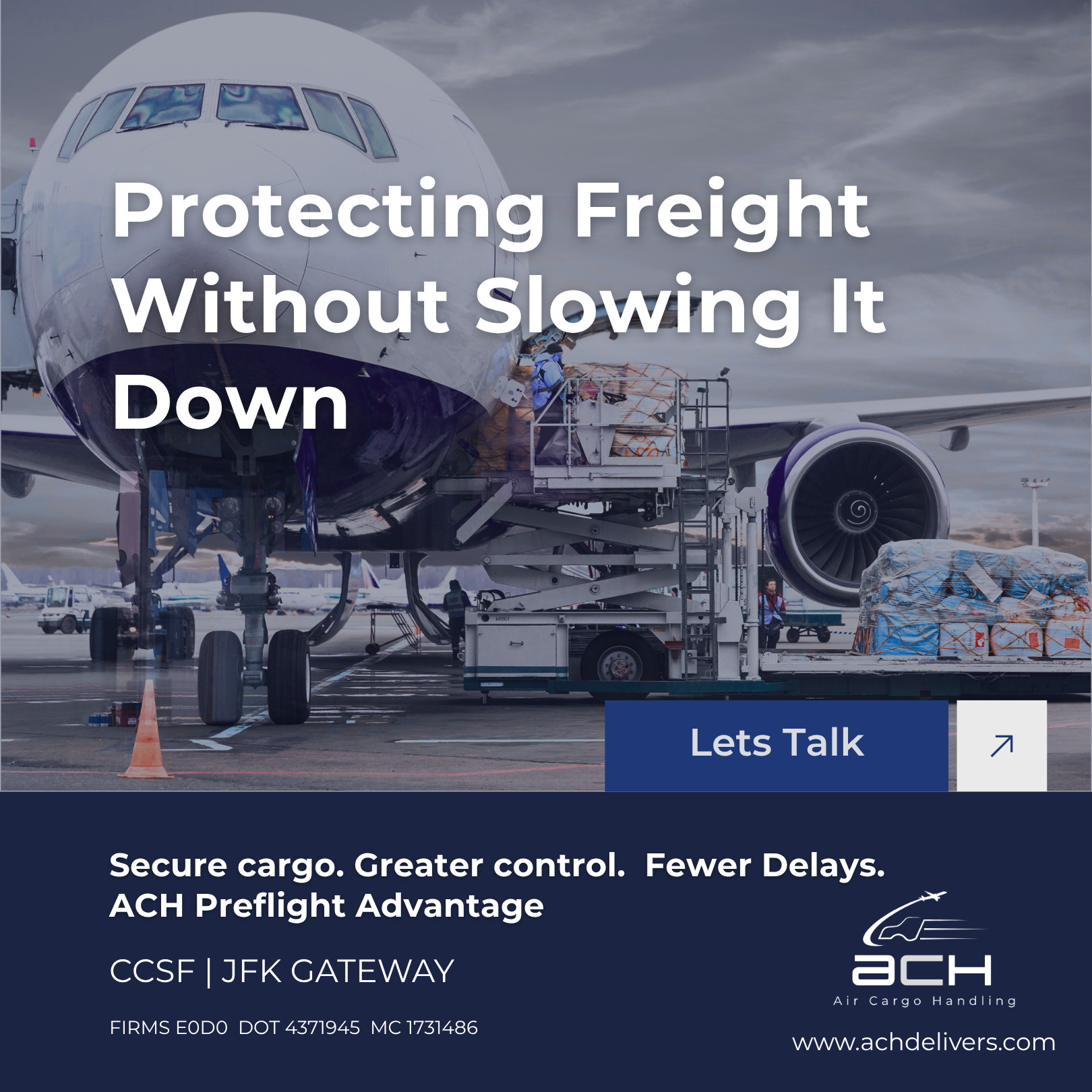
The New Air Cargo Security Challenge: Protecting Freight Without Slowing It Down
Air cargo security is evolving, but protecting freight should not mean slowing it down. As screening technology advances and supply chains become more complex, the ability to combine security, compliance, and efficient cargo handling is more important than ever. Discover how a connected approach to cargo security can help keep freight secure, compliant, and moving.
The Death of Predictability: Why Supply Chains Must Be Built for Uncertainty
Supply chains haven't become more fragile—they've become less predictable. As tariffs shift, global trade evolves, and disruptions emerge from every direction, businesses can no longer rely on yesterday's playbook. Success now depends on something different: the ability to adapt quickly, make confident decisions, and keep cargo moving when certainty is no longer guaranteed.
Why Strategic Inventory Belongs Closer to the Runway
Efficiency built yesterday's supply chains. Resilience will define tomorrow's. As global uncertainty reshapes logistics, strategic inventory is moving closer to major air cargo gateways - where integrated operations reduce complexity, accelerate response times, and keep freight moving when every minute matters. Welcome to ACH's Pre-Flight Cargo Advantage.
How Agile Supply Chains Help Importers Navigate Tariffs, Protect Cash Flow, and Stay Competitive
Tariffs and trade policy can change faster than supply chains can react. For importers, the ability to defer duty payments, strategically position inventory, and delay irreversible decisions can turn uncertainty into a competitive advantage. Discover how bonded warehousing and integrated logistics can help protect cash flow, preserve flexibility, and build a more agile supply chain.
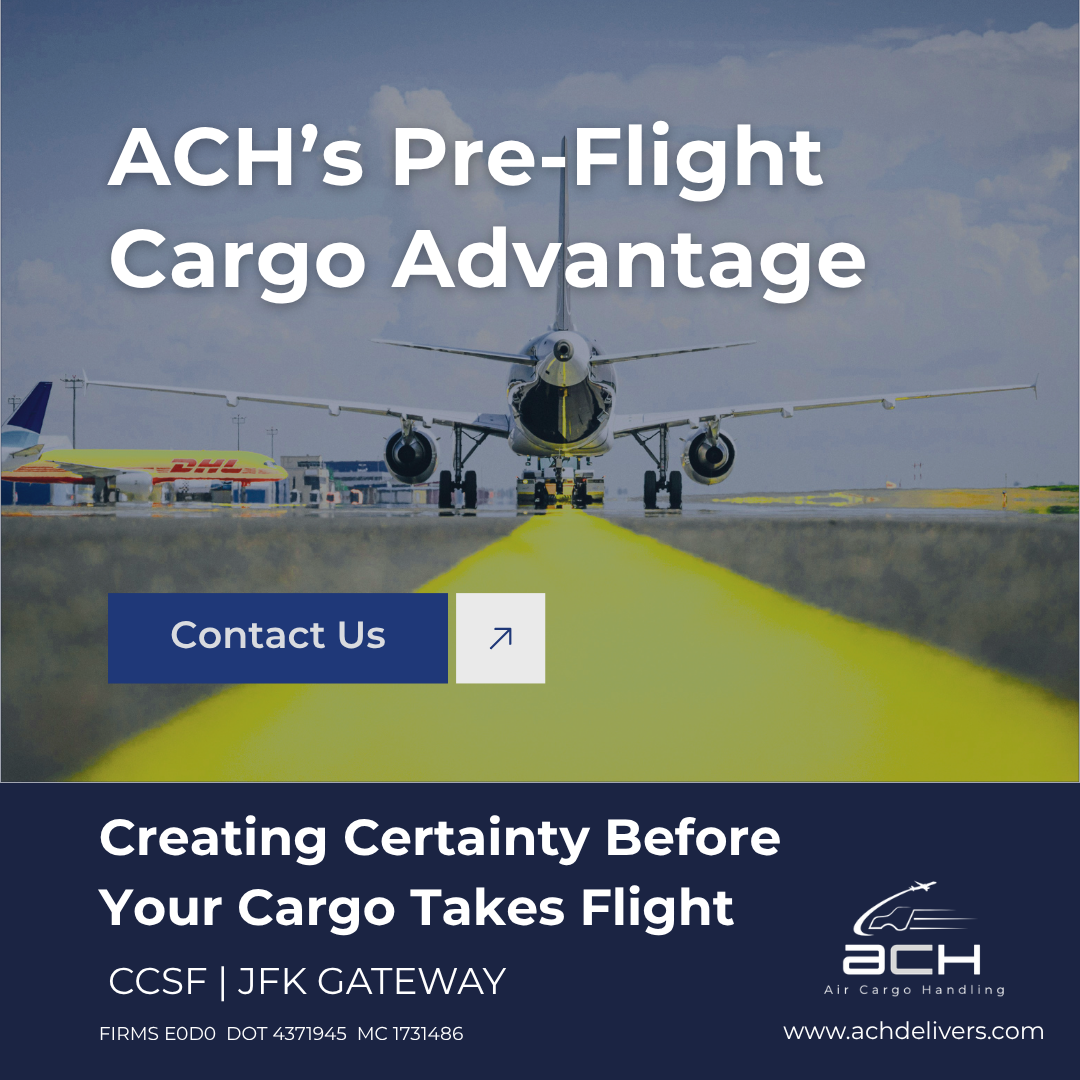
ACH’s Pre-Flight Cargo Advantage: Creating Certainty Before Your Cargo Takes Flight
Your Cargo Can Arrive at JFK on Time, and Still Miss Its Flight.
The biggest risks in air cargo often occur before freight ever reaches the aircraft. Missing documentation, compliance issues, security requirements, disconnected handoffs, and limited visibility can turn an on-time shipment into an expensive delay.
At JFK, cargo readiness is no longer just about moving freight quickly. It’s about identifying problems before they become delays.
ACH helps companies prepare, handle, coordinate, and move complex international shipments through an integrated JFK cargo operation—so freight arrives not just at the airport, but ready for its next critical handoff.
Because Your cargo’s success begins before takeoff.
International Shipping Survival Guide: How to Avoid the Delays You Can Prevent
International shipping delays are often caused long before cargo reaches the airport. From incomplete documentation and evolving customs requirements to cargo screening, missed cutoffs, and too many handoffs, many disruptions are preventable with the right preparation and coordination.
This guide explores the most common causes of avoidable delays, and how better planning, greater visibility, and integrated logistics operations can keep international freight moving.
Is Your Cargo Ready to Fly?
Prepare your cargo before it reaches the aircraft.
In today's fast-moving logistics environment, cargo readiness is just as important as speed. Learn how Certified Cargo Screening Facilities (CCSFs) help reduce delays, streamline airline acceptance, and keep freight moving through the JFK Cargo Hub.

Warehouse to Wheels Up: How Integrated Cargo Operations Protect Shipment Integrity
From warehouse floor to aircraft departure, every handoff matters. ACH’s integrated cargo operations combine secure handling, TSA Certified Cargo Screening, and coordinated logistics services to help protect shipment integrity, reduce complexity, and deliver greater confidence throughout the air cargo journey.
ACH Spotlight: Certified to Screen. ACH Delivers.
Cargo security doesn't have to come at the expense of speed.
As a TSA Certified Cargo Screening Facility (CCSF) at JFK, ACH integrates certified cargo screening into a fully connected logistics platform—helping customers reduce handoffs, improve shipment visibility, and keep freight moving efficiently through one of the nation's busiest international cargo gateways.
Learn how ACH combines security, compliance, and operational excellence to deliver smarter supply chain solutions.
Certified to Screen. ACH Delivers.
#ACHDelivers #CargoScreening #AirCargo #JFKCargo #Logistics #SupplyChain #FreightForwarding #Warehousing #Transportation #CargoSecurity